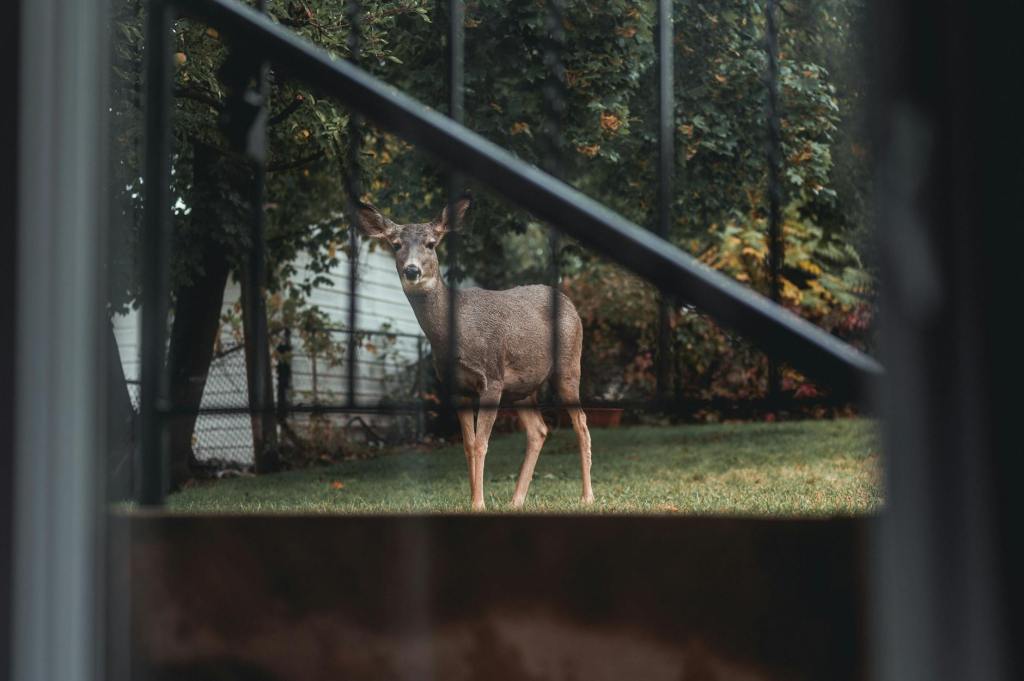
At the edge of the yard,
Something moves.
Not loud,
Not lost,
Just passing through.
We call it wild,
But it lives here too
Most of the time, we don’t really notice the animals around us. They’re just kind of there, crossing the street late at night, moving through backyards, showing up for a second and then gone. Sometimes it’s a deer by the trees or a rabbit running across the grass. Other times it’s just something rustling in the bushes. They’ve always been around, in one way or another.
The spaces we live in aren’t separate from nature, they’re part of it. As these spaces expand, animals have to adapt with it. While some retreat, others learn to live alongside us.
In places like New Jersey, it’s common to see white-tailed deer grazing at dusk, or raccoons and opossums moving through neighborhoods after dark. Red foxes appear occasionally, quick and quiet. Hawks circle above parking lots. Even coyotes, once rare in the area, have become more common in recent years.
Urban and suburban environments create a unique kind of habitat. Lawns, gardens, and parks provide food. Trash and compost offer easy meals. Fewer natural predators can make these areas surprisingly safe for certain species. For adaptable animals, known as generalists, this can be an advantage. However, this is not the case for others.
Animals that rely on specific habitats, like large forests or undisturbed wetlands, often struggle as development increases. Roads fragment ecosystems, making it harder to find food, mates, or safe shelter. Some species disappear, replaced by those better suited to human-altered landscapes. This creates a different kind of ecosystem, shaped more by people than by nature, which causes tension.
When animals become more visible, it’s easy to think of them as intruders, something out of place. We complain about how deer overgraze the grass and raccoons get into the trash, but they’re not the ones who moved. Living alongside wildlife means recognizing that our spaces are shared, even when it’s inconvenient.
 the nature diaries
Leave a comment