Racks are full, and closets too.
More comes in than we can use.
Some are worn, some never chosen
Where do they go
when the doors are closing?
I love thrift shopping. It’s less wasteful and more intentional, and it feels like good consumption. Instead of buying something new, I get to give something old another life. It’s sustainable, or at least it seems that way. I started wondering what happens to the clothes that don’t get picked, because not everything on a thrift store rack finds a new owner.
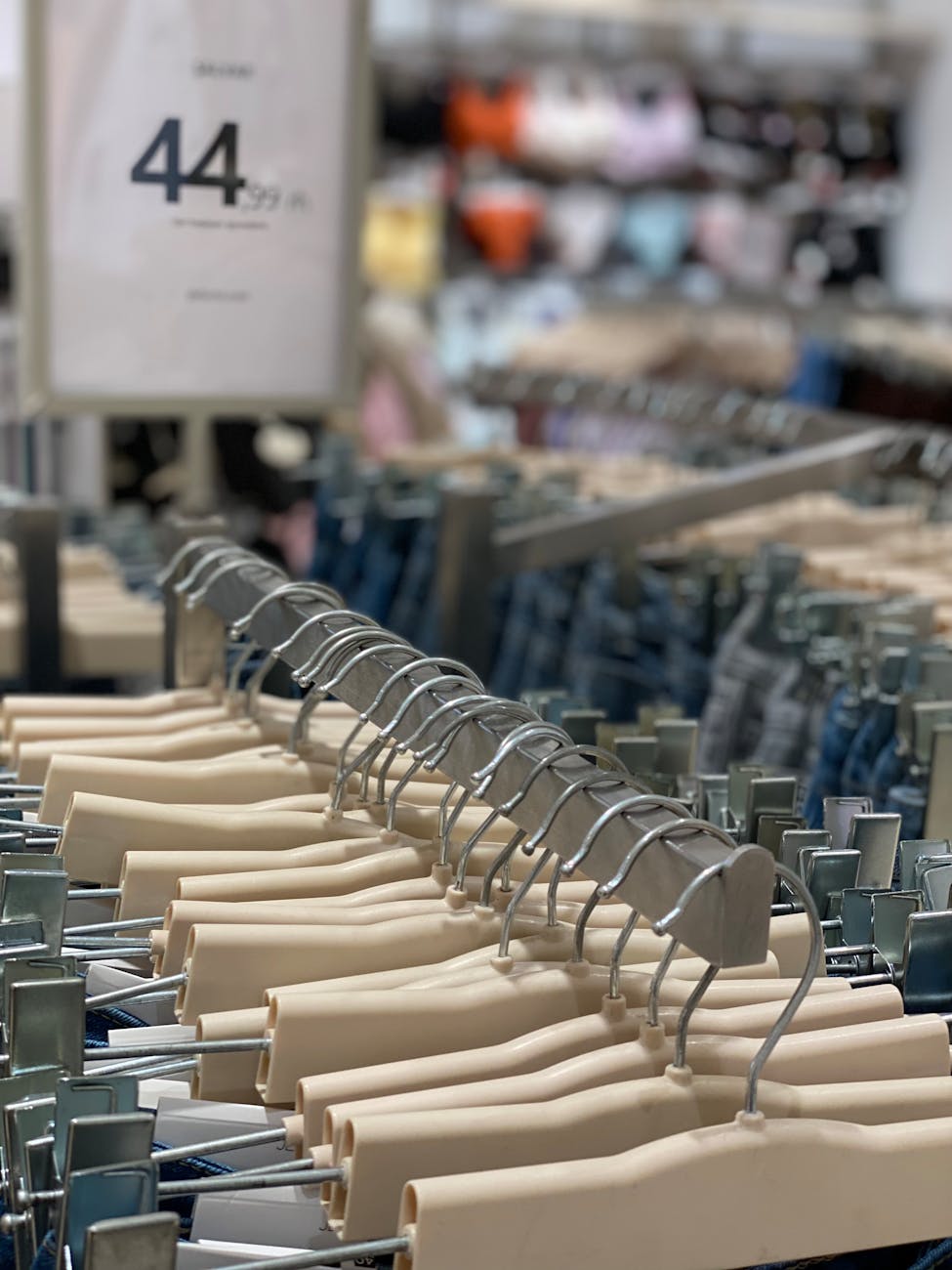
Walk into a thrift store and you’ll see rows and rows of clothing, more than any one community could realistically wear. Donations come in faster than items can be sold. Trends change, sizes don’t match demand, and some pieces are simply overlooked. In fact, only about 10-20% of donated clothing is sold in thrift stores (Council for Textile Recycling). The rest has to go somewhere.
A portion gets marked down, rotated, or sent to outlet stores where clothing is sold by the pound. But even then, a significant amount remains unsold. From there, it often enters a global secondhand market, where it is baled, shipped, and exported to countries in Africa, South America, and Asia.
While that sounds like a solution, it’s really more complicated. Many of these countries receive far more clothing than they can actually use. Local markets become saturated, and domestic textile industries struggle to compete. In places like Ghana, an estimated 15 million garments arrive each week, and a large portion ends up as waste (The OR Foundation). The items that still don’t sell, often the lowest-quality fast fashion, don’t disappear. They pile up in landfills, clog waterways, or wash up along coastlines.
So, what started as a donation doesn’t always end as reuse.
The world now produces over 100 billion garments each year, and a significant portion is worn only a few times before being discarded (Ellen MacArthur Foundation). Fast fashion has made clothing cheaper, trend cycles faster, and disposal easier.
Thrift stores have become part of that cycle, absorbing excess and redistributing it, but they cannot fully solve the problem. They’re more of a buffer than a fix. That doesn’t mean thrift shopping is bad. Buying secondhand is still one of the more sustainable options available, but it’s not a complete solution because the real issue is how many clothes we produce in the first place.
The next time I go thrift shopping, I’ll probably still enjoy it. Still, I’ll also be thinking about the clothes that don’t get chosen, which reminds us that sustainability requires both saving and reusing, as well as responsible production.
 the nature diaries
Leave a comment