Some streets grow shade,
Others grow heat.
Some children walk
Where branches meet.
Some know soft grass,
Some only stone.
Not every neighborhood
Gets a place to roam.
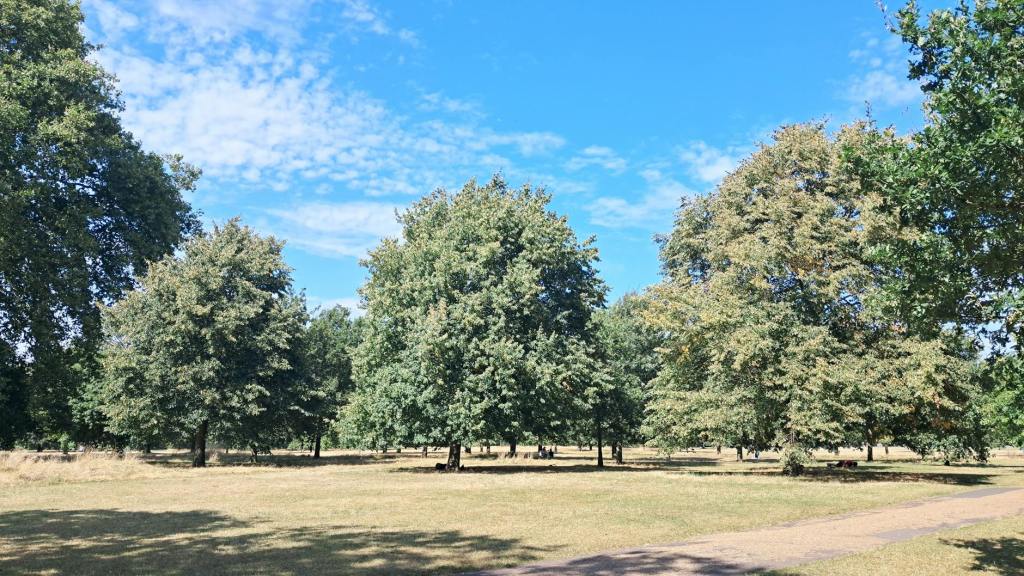
There’s a park not too far from where I live with wide walking paths, old trees that somehow survived development, benches placed at just the right distance from one another, a clean playground, and maintained fields. It’s like someone decided this space was worth preserving. But that’s not true everywhere.
The more you pay attention, the more obvious it becomes how uneven access to green space really is. Some neighborhoods are filled with tree-lined streets and nearby parks within walking distance, while others only have patches of grass between roads, if that.
That difference isn’t random.
In many parts of New Jersey, historically redlined neighborhoods still have fewer trees and less park access today. Areas that were once marked as “undesirable” for investment often received fewer public resources, which included green space. Decades later, those patterns are still visible. Some communities live near nature preserves and shaded playgrounds. Others live near highways. And that has real consequences.
Parks aren’t just aesthetic; they’re functional. Trees lower neighborhood temperatures during heat waves. Green spaces absorb stormwater and reduce flooding risk. Access to safe outdoor areas supports mental health, physical activity, and community connection. Without them, the built environment becomes harsher. It results in hotter streets and poorer air quality. There are fewer places to gather and fewer buffers against extreme weather.
In cities like Newark, community groups have fought for more equitable access to green space, pushing for tree planting and park investment in neighborhoods that were historically overlooked. These efforts recognize that environmental protection isn’t only about distant forests, but also about our everyday surroundings.
Who gets shade in the summer? Who has somewhere safe to walk? Who grows up seeing nature as something nearby instead of something you have to travel to find? The answers often follow lines drawn long ago. It’s easy to think of parks as neutral, but their distribution tells a story about whose well-being was prioritized, and whose wasn’t.
 the nature diaries
Leave a comment